Date and Venue: August 3 to August 7, 2026, Department of Mathematics at the University of Pittsburgh.
Support: This event is free of charge. We gratefully acknowledge the support provided by the AMS Young Scholars Program, an initiative of the AMS Epsilon Fund, and the support by the Department of Mathematics.
Registration Link: The registration has expired on June 15, 2026.
Event Description: This program is a continuation of Girls' Summer Math Camp 2025 and the second installment of the pilot program Girls' Summer Math Camp 2024, aimed at female high school students (ages 15-17) attending schools in the greater Pittsburgh area. The objective is to expose the participants to different areas in mathematics and thereby spark the interest in mathematics among female pupils and contribute to the development of future female scientists.
Schedule:
|
9am - noon |
noon - 1:15pm |
1:15pm - 4:00pm |
4:15pm - 5pm |
|
|
Monday, August 3 |
Lectures: |
Lunch |
Group Projects |
Lab tour: |
|
Tuesday, August 4 |
Lectures: |
Lunch |
Group Projects |
Talk: |
|
Wednesday, August 5 |
Lectures: |
Lunch |
Group Projects |
Lab tour: |
|
Thursday, August 6 |
Lectures: |
Lunch |
Group Projects |
Talk: |
|
Friday, August 7 |
Group Projects |
Lunch |
Student Presentations |
Introduction to the Undergraduate Program at Pitt |
Each day, except for Friday, is structured in the same way. The morning consists of lectures concerning the specific area of Mathematics, prepared and executed by the expert permanent faculty from the University of Pittsburgh. This is followed by lunch (provided by the organizers) and further followed in the afternoon by group projects, where students can test their understanding of the material taught in the morning session. The group project sessions will be supervised by the graduate students who are members in the Pitt chapter AWM Department of Mathematics. The specific group project tasks will be developed by the faculty who taught the corresponding morning session. Each such topics day ends with a talk by a Pitt affiliated researcher or an external activity. We will also organize field trips to a physics or biology lab, and a final panel Q&A where students can ask questions about the Mathematics undergraduate program at Pitt. On Friday morning, students will continue working on their projects, that will be presented after lunch and completed with students obtaining the participation certificates.
Poster: (click on the image below to download the file)

Location and Address
Department of Mathematics at the University of Pittsburgh. The pick up and drop off location is at the Parking Lot of the University Club, right in front of the main entrance. More information will be available to the accepted participants one week before the event.
Speaker Information
Organizers: Marta Lewicka, Sabrina Streipert, AWM chapter University of Pittsburgh
Principal Supervising Faculty:

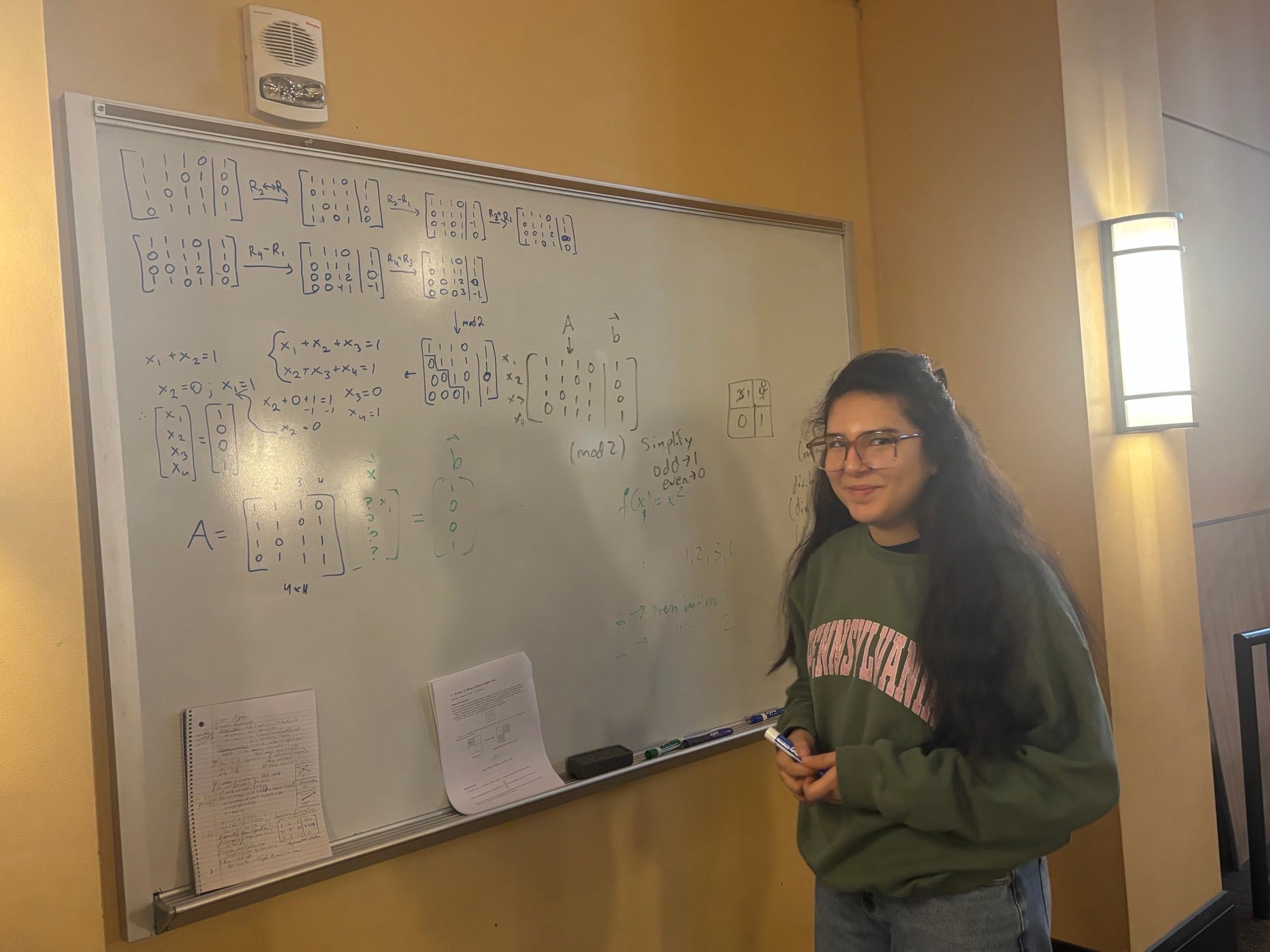
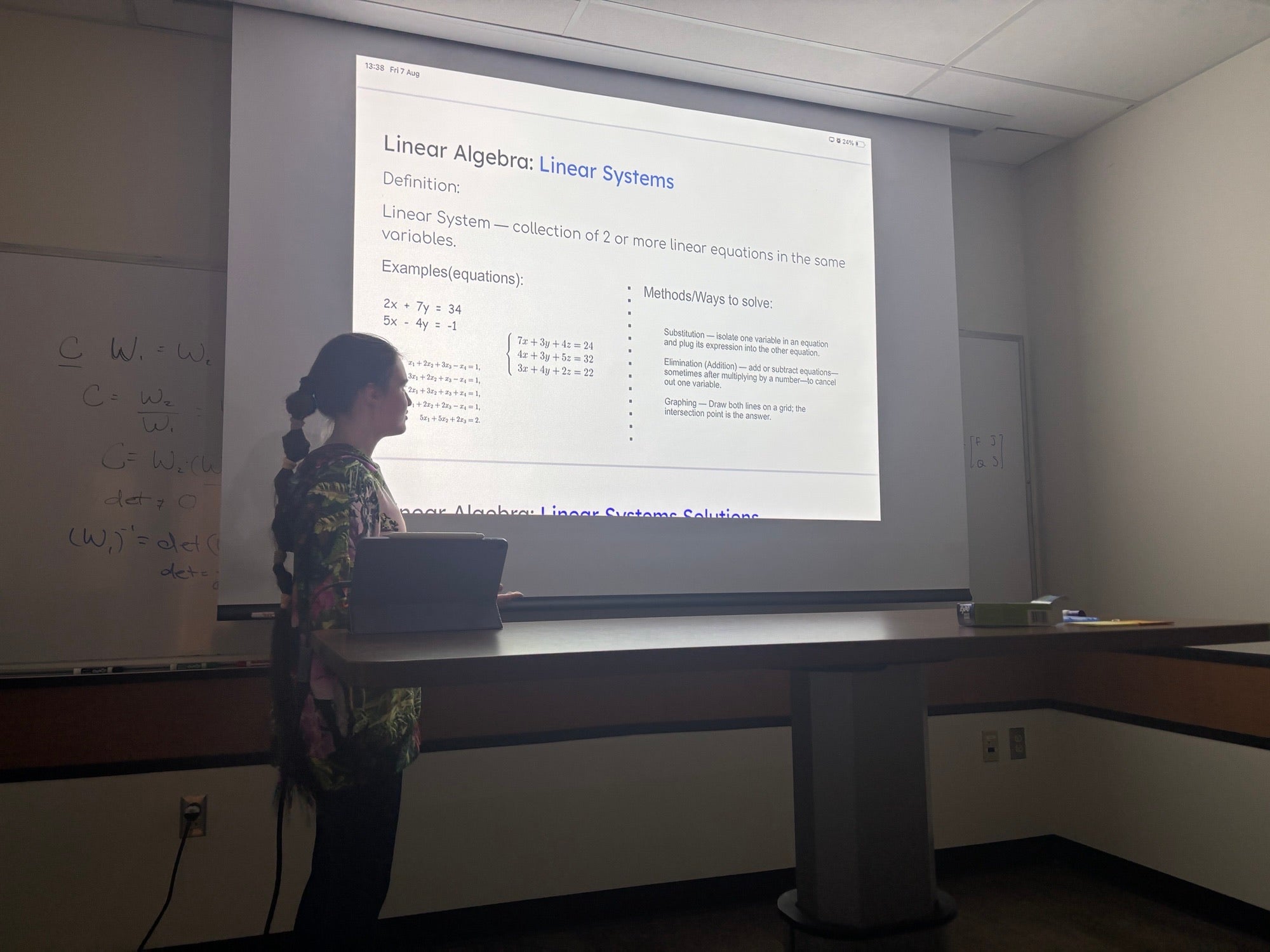
Professor Tom Everest: Linear Algebra
Many real-world problems involve several unknowns, and linear systems provide a powerful way to solve them. In this introductory class, students will learn what systems of linear equations are, how to solve them, and how to interpret solutions geometrically in two- and three-dimensional spaces. We will also explore exciting applications, including finite linear games, analyzing traffic flow, and explain how Google uses linear algebra to deliver relevant search results.
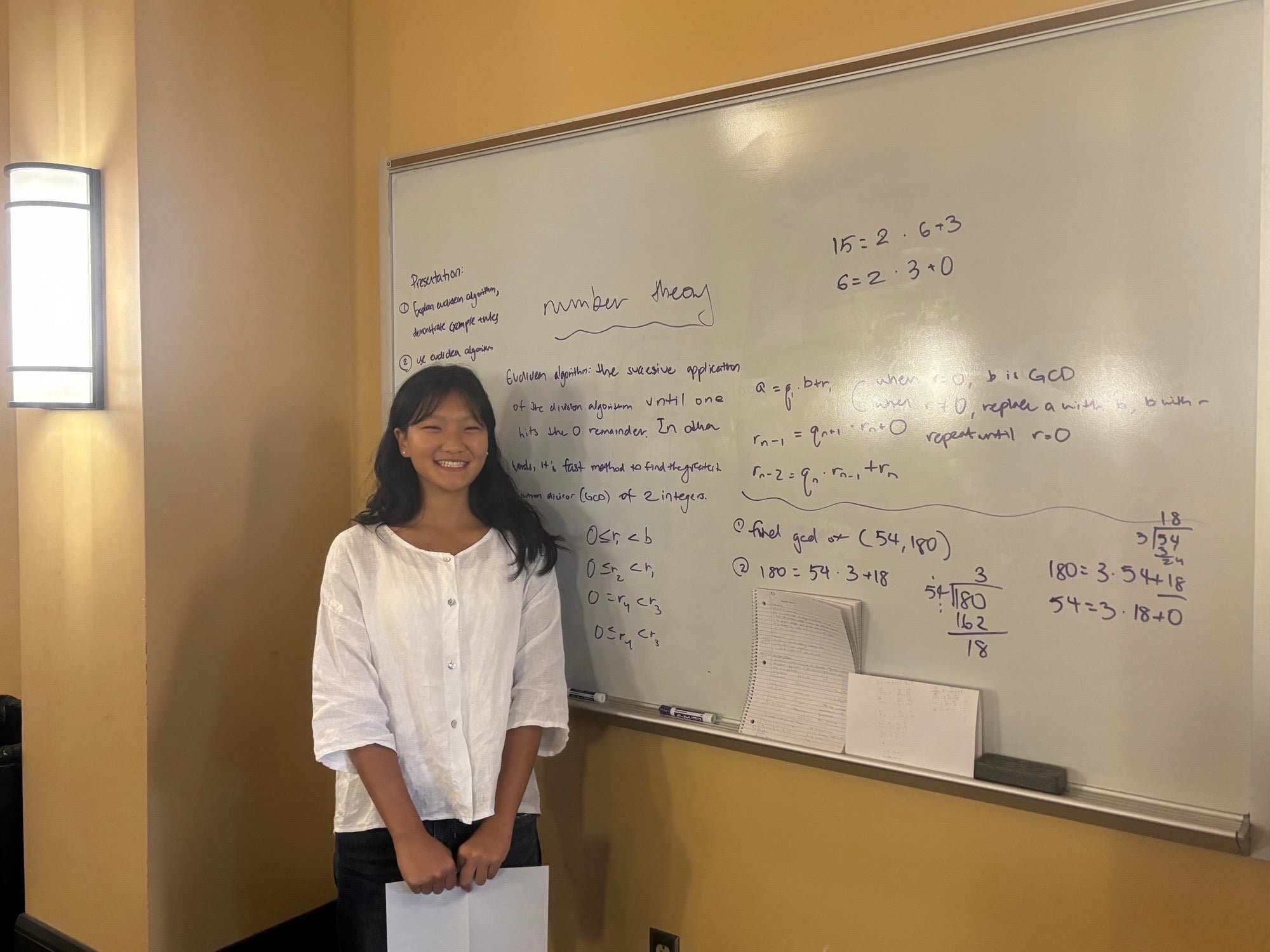
Professor Roxana Popescu: Number Theory
This course will first focus on recalling the fundamental concepts in the field of Number Theory, such as: divisibility, prime numbers, congruences, the integer (floor) function, and more. Through various applications, we will see the power of proof by contradiction, prime factorization and prime divisors. We will then pass to the famous Fermat’s theorem and Euler’s theorem. We hope for the students to develop a solid grasp of these foundational concepts and to strengthen their logical reasoning and proof-writing skills.

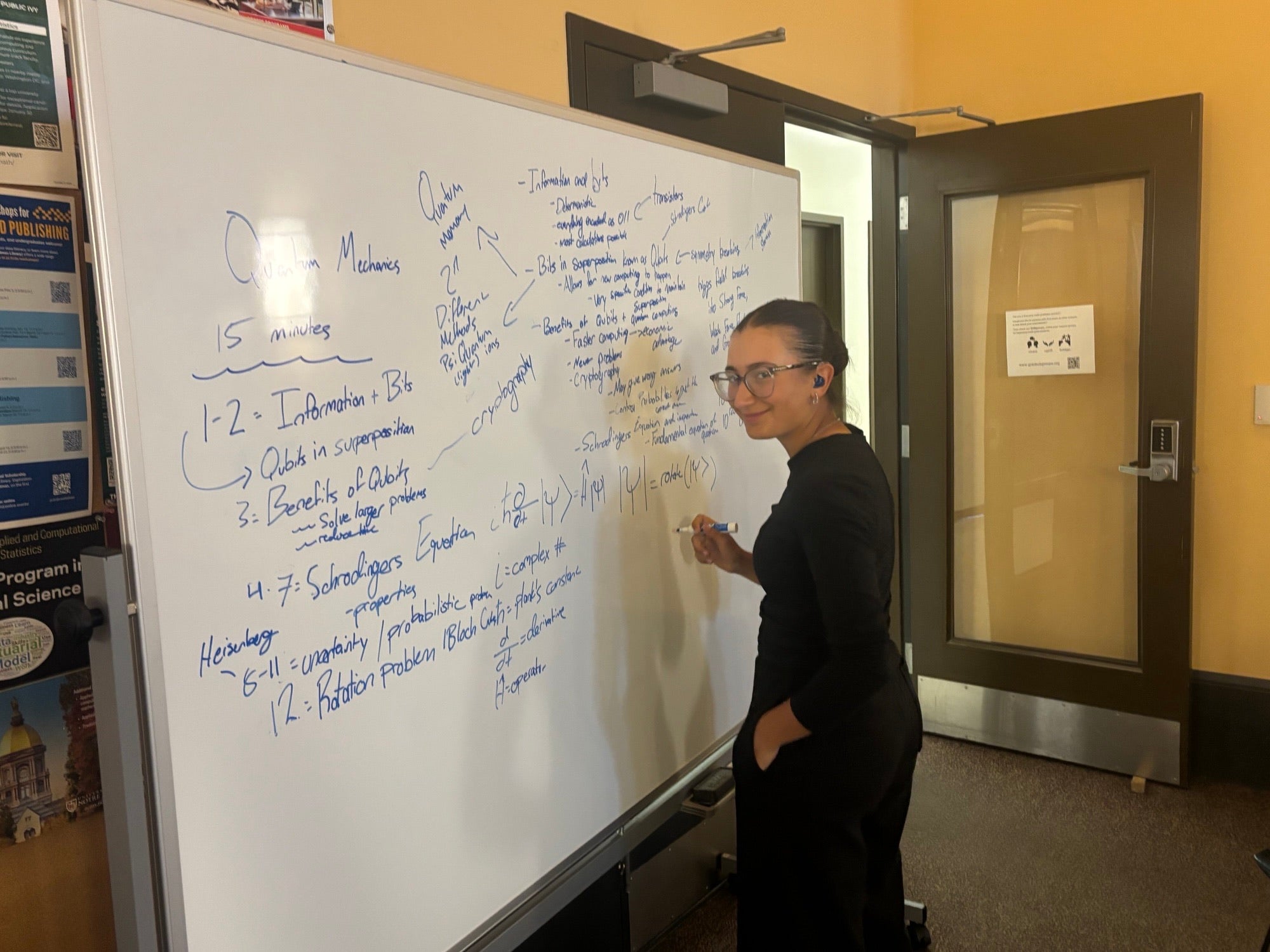
Professor Chandralekha Singh: Hands-On Quantum: Exploring Quantum Mechanics with Bloch Cubes
Quantum mechanics rests on a rich mathematical foundation, vectors, inner products, operators, and rotations, that can feel abstract on the page. Bloch Cubes are a hands-on educational tool that make these mathematical ideas concrete. Opposite faces represent distinct quantum states, and rotations of the cube correspond directly to operators that transform those states. In this session, participants will use Bloch Cubes to explore quantum states, measurement, superposition, and quantum dynamics, building geometric intuition for the mathematics that underlies modern quantum science and the Second Quantum Revolution.

Professor Sabrina Streipert: Network Science
In my lecture, I will introduce you to Network Science, a rapidly-growing new area at the interface of multiple fields. A wide range of complex systems and phenomena ranging from the spread of diseases and information to dynamics of friendships and metabolic reactions can be analyzed using methods of network science. You will be introduced to different networks such as small world, scale-free, and random networks and learn how to recognize them in real-life settings. In that process, you will learn foundational concepts to analyze networks, including graph properties such as connectedness and clustering.
Other Faculty Involved:
Professor Huiqiang Jiang (Department of Mathematics)
Professor Jeremy Levy (Department of Physics and Astronomy, Pittsburgh Quantum Institute)
Professor Corinne Richards-Zawacki (Department of Biological Sciences)

Professor Marta Lewicka: Partial Differential Equations
Contact us at: girlsatPitt@gmail.com
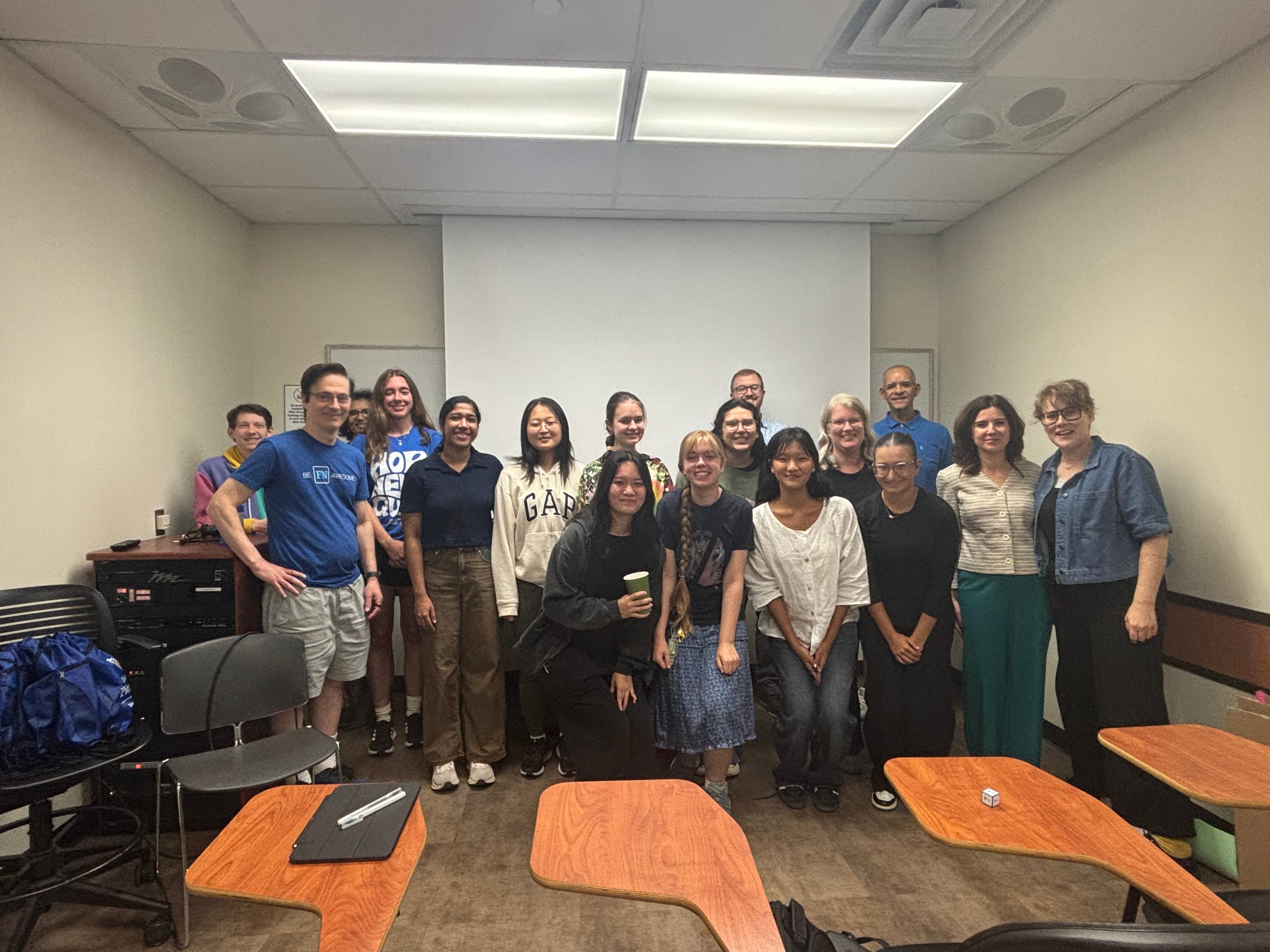
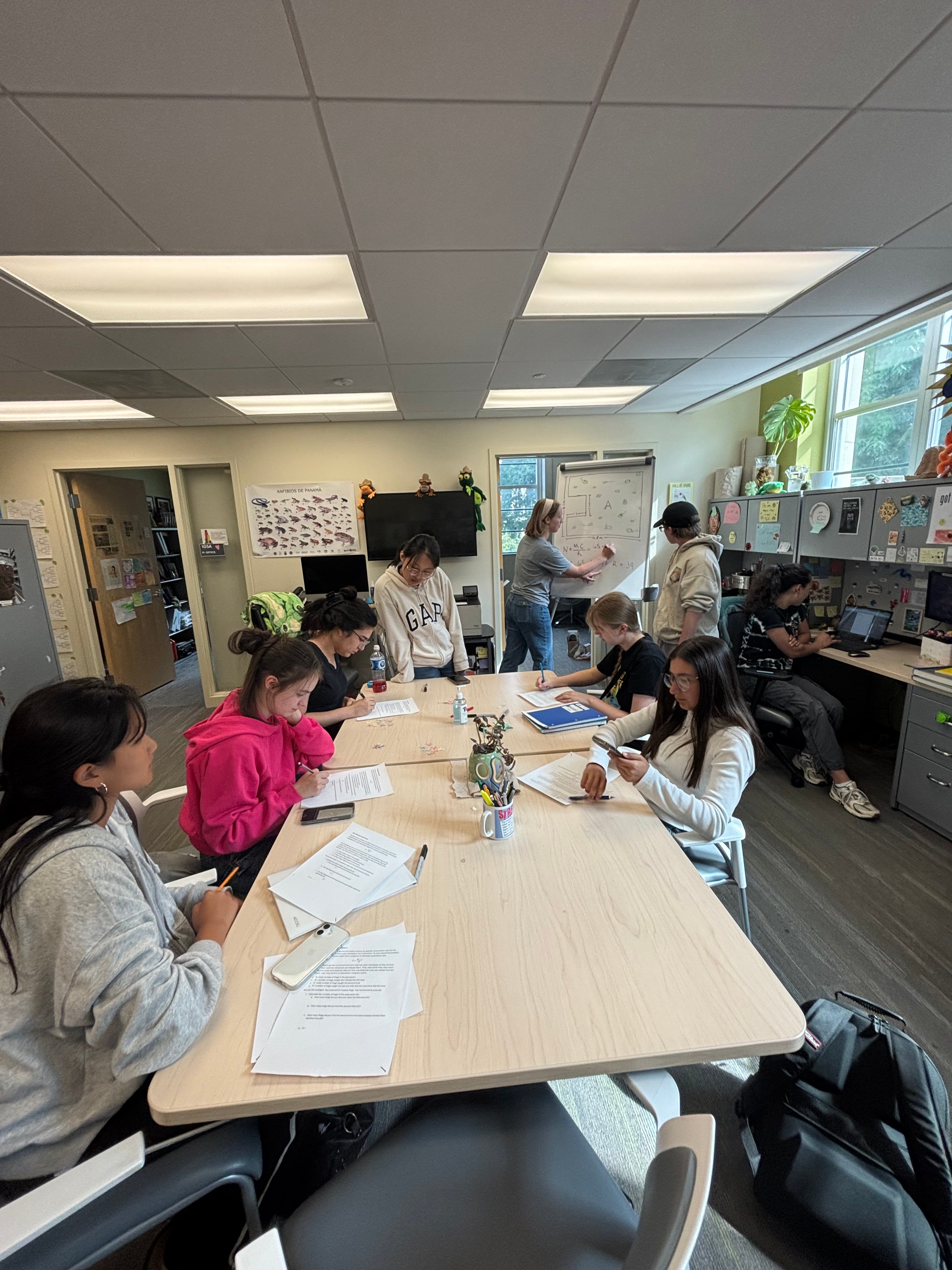
Some pictures: