Faculty Retirement Spotlight
Professor Thomas Hales served as the Andrew Mellon Professor of Mathematics from 2001 to 2025 and retired on May 1, 2025. Professor Hales has transformed the Mathematics Department by establishing research areas in algebra and geometry, enhancing the department's and the University's reputations through his renowned research achievements. In particular, he solved long-standing problems, including the Kepler Conjecture and the Honeycomb Conjecture, among other significant accomplishments. He has been a driving force behind the formalization of mathematics. He has supervised numerous graduate students and mentored many undergraduate research projects. In 2004, he established the Hales Distinguished Research Award for the best PhD dissertation in the Math Department. He served as the Undergraduate Director for the 2024-2025 academic year. His extraordinary service to the department, university, and profession has made a lasting impact. The Math Department sincerely thanks him for his dedicated service and invaluable contributions to research and education. His impact has been profound, and he will be deeply missed. We honor Professor Hales's outstanding career and wish him all the best in his retirement.
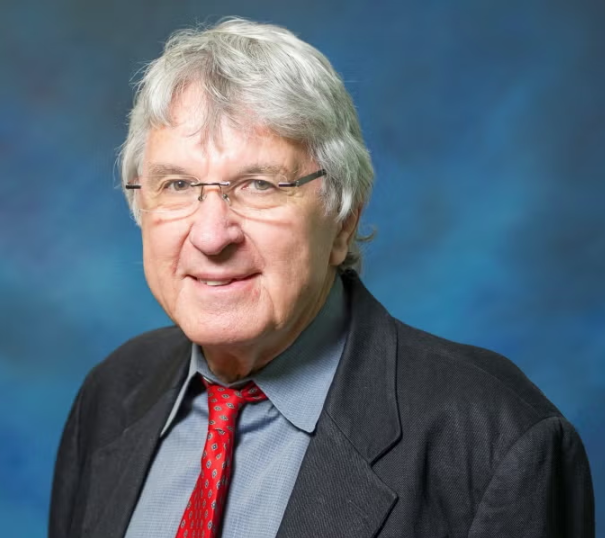 Professor John Chadam was appointed as a Full Professor and Department Chair in 1996 and retired on August 31, 2025. He served as department chair from 1996 to 2005 and transformed the department by restructuring its administrative framework from a model where all decisions were made solely by the Chair and Assistant Chair to a more inclusive and democratic system. This change shifted decision-making authority to newly elected committees (PBC, Merit, Graduate, Undergraduate, etc.) and has remained largely unchanged for the past thirty years. With support from the Dean, Provost, and Chancellor, he led the department in hiring new faculty to shift its focus from a primarily service-oriented department to a highly research-active one. Professor Chadam has achieved remarkable academic success, including a strong record of research publications, successful grant funding from NSF, and mentoring many Ph.D. students. He has also made extraordinary contributions to the service of the department, the university, and the profession. The Math Department would like to express our heartfelt thanks for his long-standing distinguished service and invaluable contributions to our research and educational mission and programs. His influence has been significant, and he will be deeply missed. Congratulations to Professor Chadam on his distinguished career and happy retirement!
New Undergraduate Director

The Department of Mathematics has a new Undergraduate Director, Professor Huiqiang Jiang, who took over the role starting in the Fall term of 2025. Mellon Professor Dr. Thomas Hales served as the Undergraduate Director from 2024 to 2025. We appreciate Dr. Hale's dedicated commitment and exceptional service, especially his professional handling of all the responsibilities.
We are grateful to Dr. Jiang for stepping into this role and for his leadership of the Undergraduate Committee as we navigate both current and future challenges in our undergraduate program.
New Graduate Director 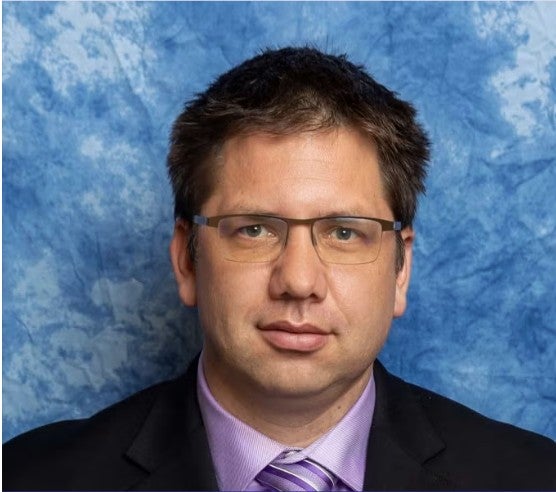
The department has also appointed Professor Armin Schikorra as the new Graduate Director, effective Fall 2025. Professor Michael Neilan served in this position from 2022 to 2025. We sincerely thank Dr. Neilan for his dedicated service and expert management. We welcome and appreciate Dr. Schikorra's leadership and guidance of the Graduate Committee as we face ongoing and upcoming challenges in our graduate program.
Research
Analysis of Hyperbolic and Mixed-Type PDEs in Conservation Laws and Applications
Professor Dehua Wang's research has received continuous support from the NSF. The latest award, DMS-2510532, funds the project "Analysis of Hyperbolic and Mixed-Type PDEs in Conservation Laws and Applications” for three years, from 2025 to 2028. This project aims to develop new mathematical methods and techniques to analyze certain nonlinear partial differential equations (PDEs) that govern fluid flows and related phenomena. Fluid flows, such as gases, are significant in nature. Their study is essential for understanding dynamics across many scientific and engineering fields, including gas dynamics, materials science, geometry, turbulence, and shell theory. While one-dimensional problems in this area are relatively well understood, the theory for multi-dimensional cases remains underdeveloped mathematically. This project seeks to advance the mathematical understanding of multi-dimensional conservation laws and their applications in fluid dynamics and geometry, integrating research and education to support future STEM workforce development. The research will focus on the following problems: (1) the existence and stability of transonic contact discontinuity in a three-dimensional axisymmetric nozzle in gas dynamics—this is a free boundary and mixed-type problem, with a characteristic free boundary, and the study aims to shed light and propose new methods for the general multi-dimensional theory of conservation laws; (2) the existence of a global solution to transonic flow past a three-dimensional axisymmetric cone in gas dynamics—new ideas and techniques will be developed to solve this mixed-type PDE problem; and (3) the global smooth solution to the Gauss-Codazzi equations of isometric surface immersion—finding a global smooth solution to this hyperbolic system of balance laws would enable a smooth isometric immersion of surfaces. A longstanding open problem is to find such a solution when the surface's curvature exhibits optimal decay and oscillations. By developing innovative analytic methods for these key problems, the project aims to deepen understanding of multi-dimensional PDEs in fluid dynamics and geometry. It will enhance knowledge in fundamental mathematics and mechanics while providing valuable training opportunities for students in applied mathematics.
Geometric Function Theory: Piotr Hajlasz’s NSF & Simons Foundation Grants
Piotr Hajlasz has recently been funded by the US National Science Foundation (award DMS 2452426) for the proposal “Geometric Function Theory: Analysis, Geometry and Topology” for the period of July 15, 2025 – June 30, 2028. He was also funded by the Simons Foundation (award SFI-MPS-TSM-00013328) for the proposal "Geometric Function Theory" for the period of September 1, 2025–August 31, 2030.
The NSF project explores fundamental problems in Geometric Function Theory, focusing on mappings and functions with limited differentiability, such as convex functions, Sobolev functions, and Lipschitz and Hölder continuous mappings. Geometric Function Theory has its roots in classical complex analysis and quasiconformal mappings, but over the past decades it has evolved into a rich and modern field with deep connections to other areas, including convex analysis, analysis on metric spaces and Heisenberg groups, contact and symplectic geometry, and geometric measure theory. This broadening has been driven by the need to understand nonlinear phenomena and low-regularity structures in both pure mathematics and applied sciences. These types of maps are essential in modeling irregular behavior, where classical smooth tools fail. By studying their analytic, geometric, and topological behavior, the project seeks to uncover new mathematical principles that improve our understanding of irregular structures. The research is structured around 21 well-defined objectives, most of which are formulated as precise mathematical conjectures with definitive yes-or-no answers. These investigations aim to generate new directions in geometric analysis and topology while contributing to the broader mathematical community. The research is expected to support the national interest by advancing mathematical knowledge, training students, and providing tools applicable to areas that depend on the analysis of non-smooth structures.
Piotr Hajlasz studies several interconnected areas of research. These include: (1) Lusin approximation and rectifiability questions in convex analysis; (2) regularity of homeomorphisms in Euclidean spaces, including the study of the sign of the Jacobian; (3) Guth's conjecture about the homotopy theory of continuously differentiable maps whose derivatives have low rank; (4) Gromov's conjecture about Hölder continuous embeddings into the Heisenberg group and related questions about the topology of Lipschitz and Hölder continuous maps in the Heisenberg group; (5) Sobolev extension domains; and (6) analysis on metric spaces and the geometric measure theory of Lipschitz mappings into metric spaces. The project combines analytic, geometric, and topological methods to address both longstanding open problems and newly formulated questions. The anticipated outcomes include theoretical advances, publication of results in leading journals, and training of graduate students in cutting-edge mathematics.
Awards
Humboldt Research Award
Ivan Yotov has received the Humboldt Research Award from the Alexander von Humboldt Foundation in Germany. The Humboldt Research Award is conferred to internationally recognized researchers in recognition of their entire academic record to date. The Alexander von Humboldt Foundation sponsors distinguished international scientists and scholars irrespectively of their academic discipline or nationality and maintains an international network of academic cooperation and trust.
Chancellor's Distinguished Research Award
Professor Piotr Hajlasz was awarded the 2025 Chancellor's Distinguished Research Award. This award annually recognizes the outstanding scholarly accomplishments of members of the University of Pittsburgh's faculty.
Prestigious Jürgen Moser Lecture Prize for 2025
Professor Bard Ermentrout, has just received the prestigious Jürgen Moser Lecture/Prize from the Society for Industrial and Applied Mathematics (SIAM) for 2025. The SIAM Activity Group on Dynamical Systems (SIAG/DS) awards the Jürgen Moser Lecture every two years to an individual who has made distinguished contributions to nonlinear science. The term “nonlinear science” is used in the spirit of the SIAG on Dynamical Systems conferences. Specifically, it includes dynamical systems theory and its applications as well as experiments, computations, and simulations. The Jürgen Moser Lecture includes a $3,000 monetary prize, a certificate containing the citation, and an invitation to give a plenary lecture at the SIAM Conference on Applications of Dynamical Systems. The prize will be awarded at the 2025 SIAM Conference on Applications of Dynamical Systems.
Congratulations to Dr. Yotov, Dr. Hajlasz, and Dr. Ermentrout!